Product image 1, can be opened in a modal.
IRONFLAME Grills 3-pack Charcuterie/ Cutting board set

IRONFLAME Grills 3-pack Charcuterie/ Cutting board set

Regular price $44.99 USD
Regular price Sale price $44.99 USD
  • Inventory on the way

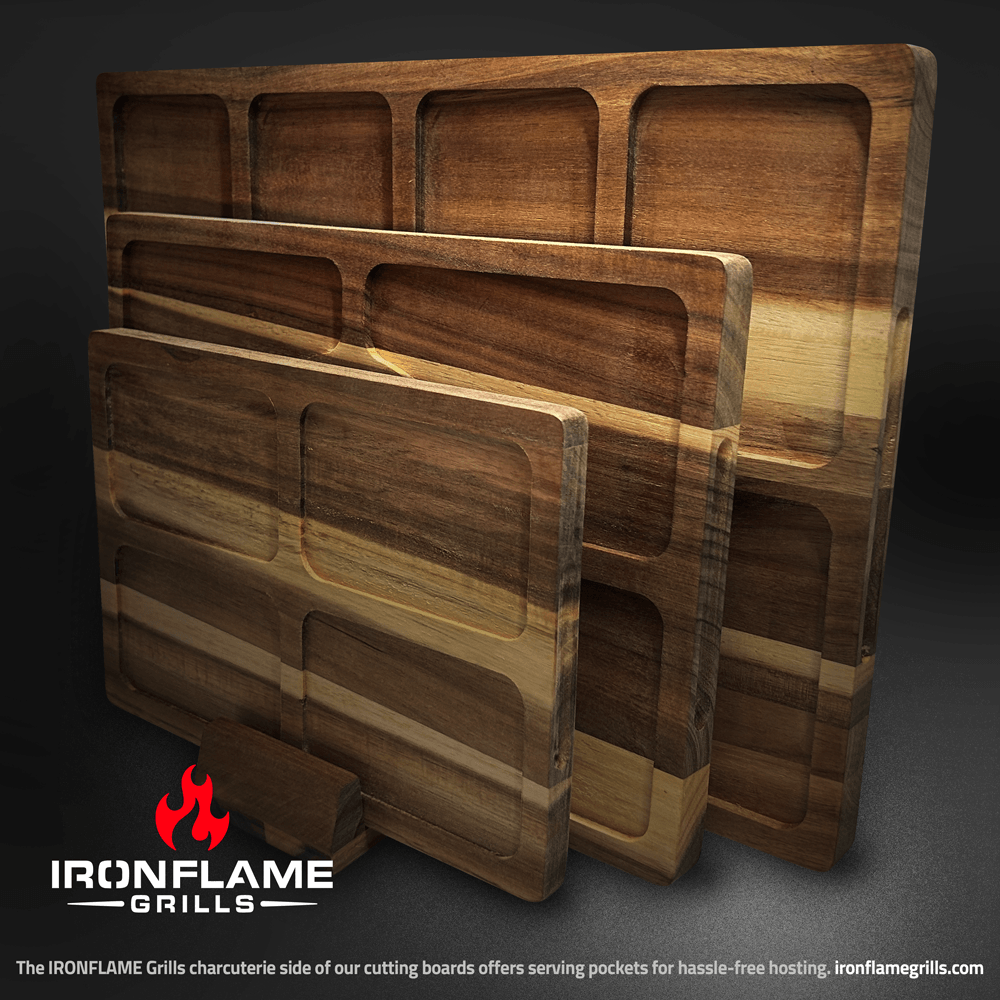
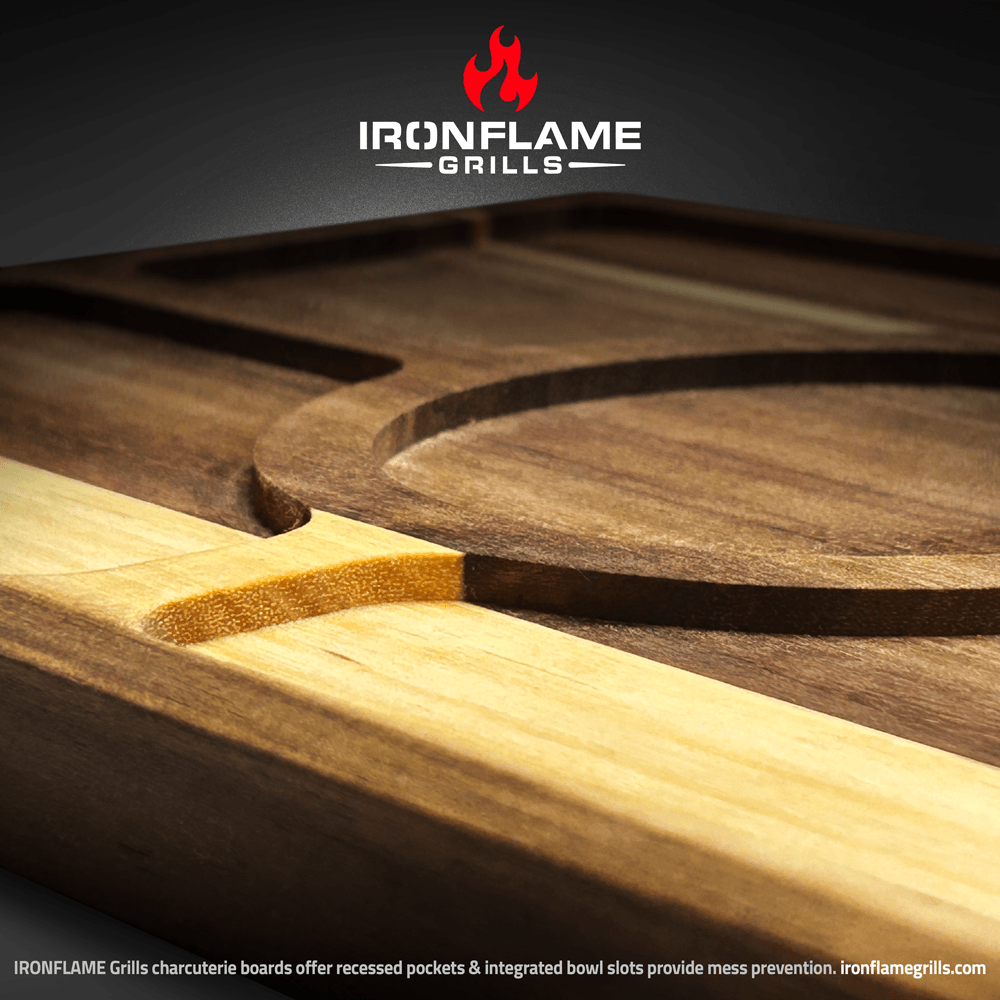
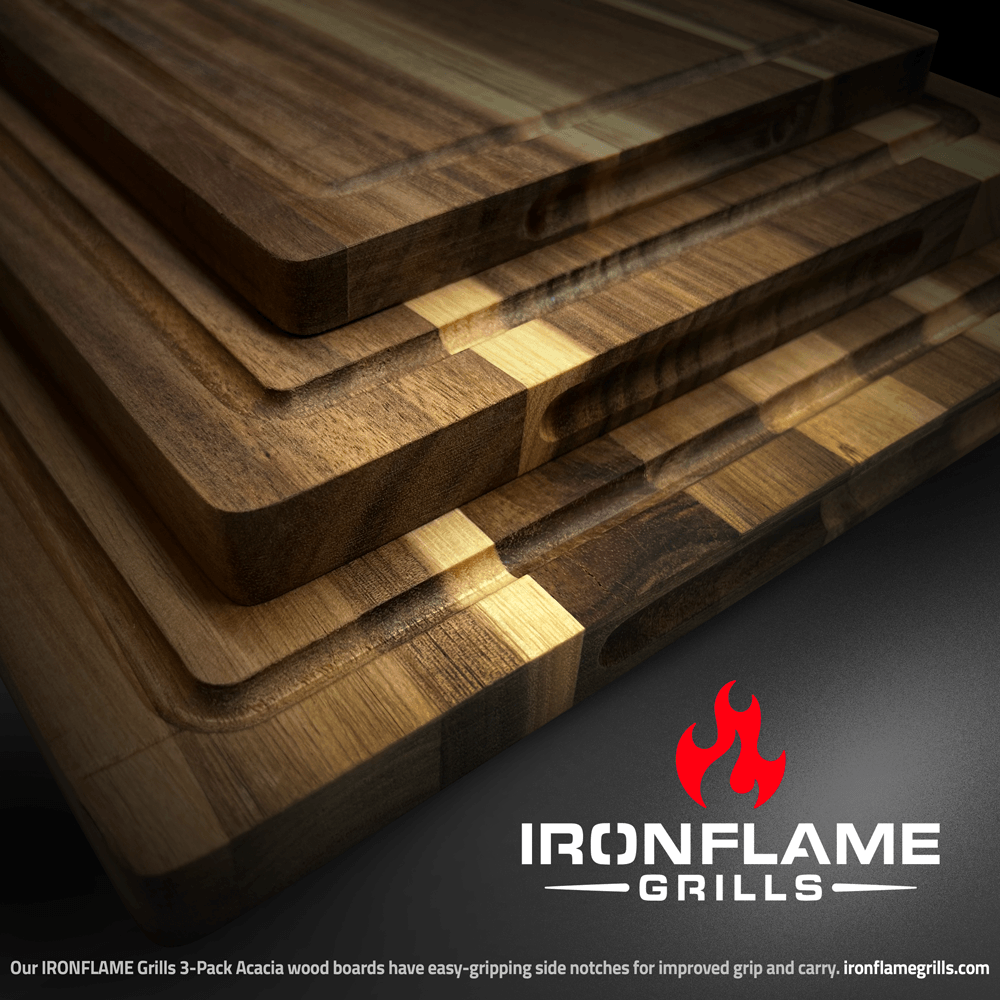
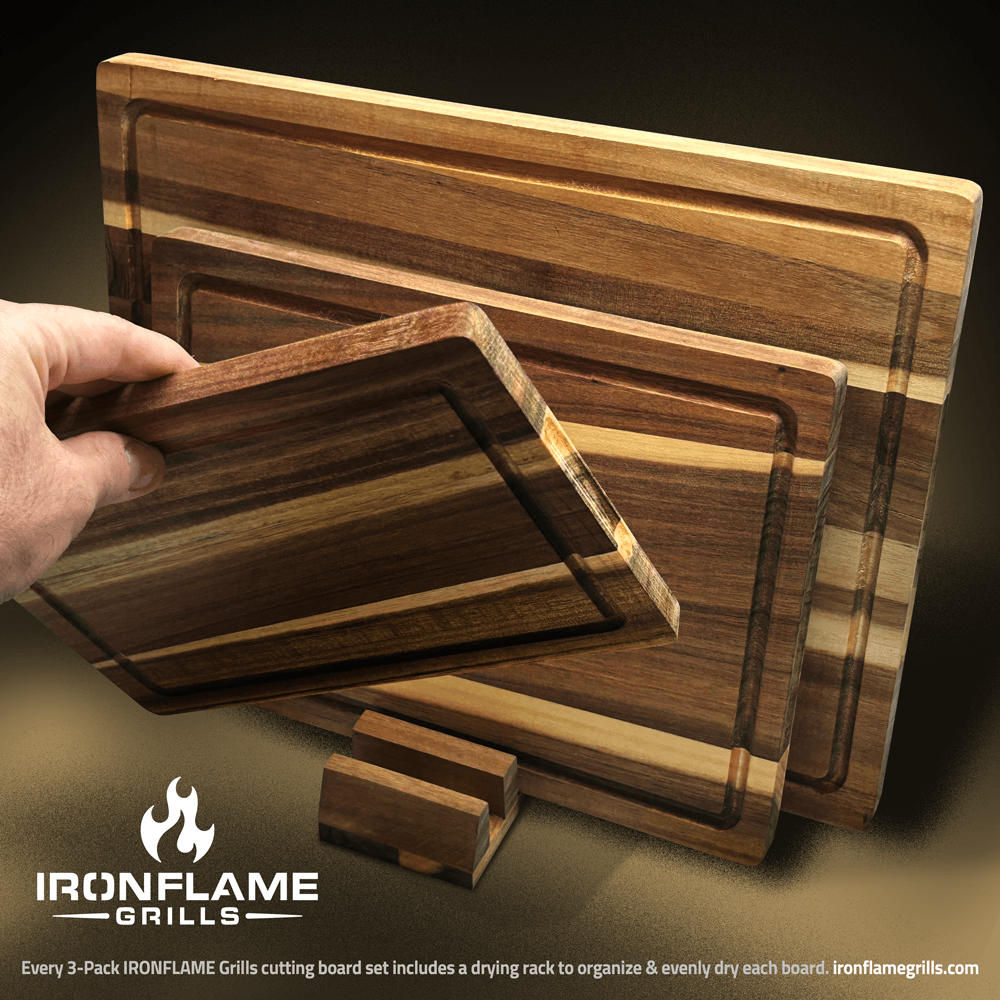
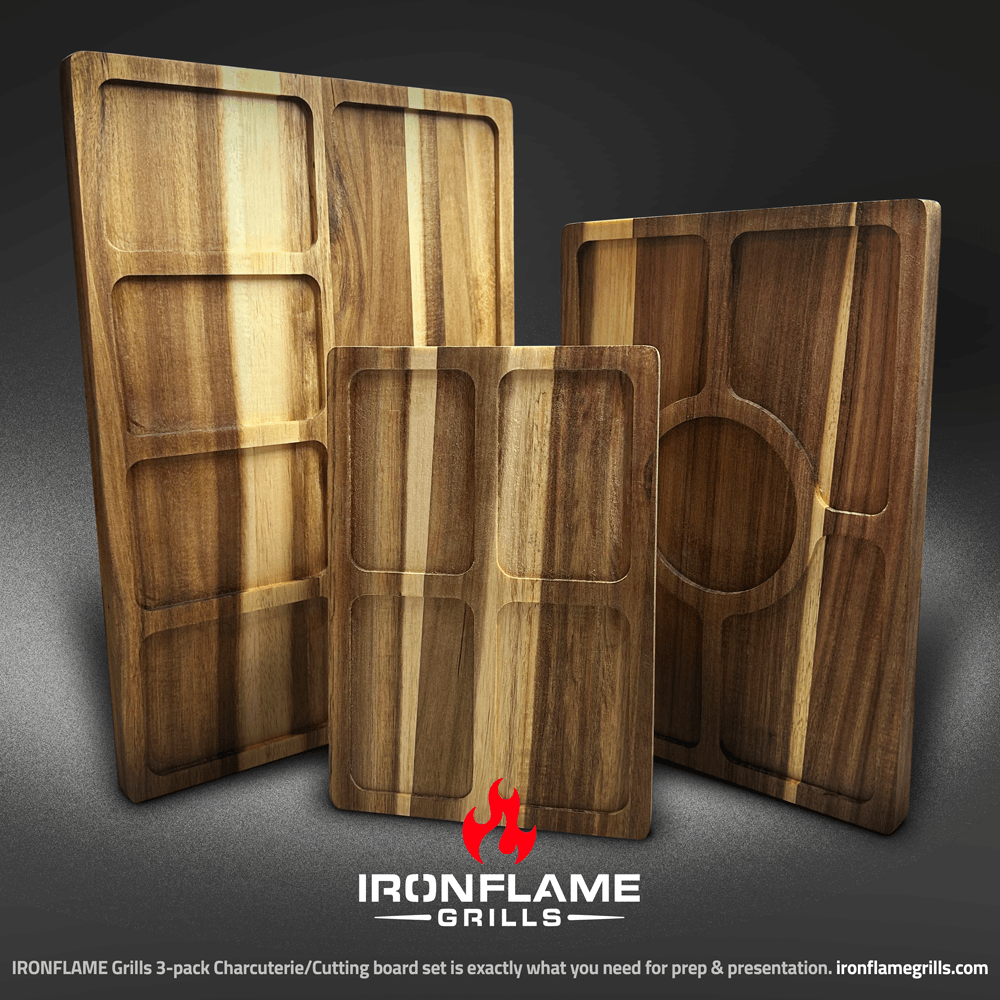
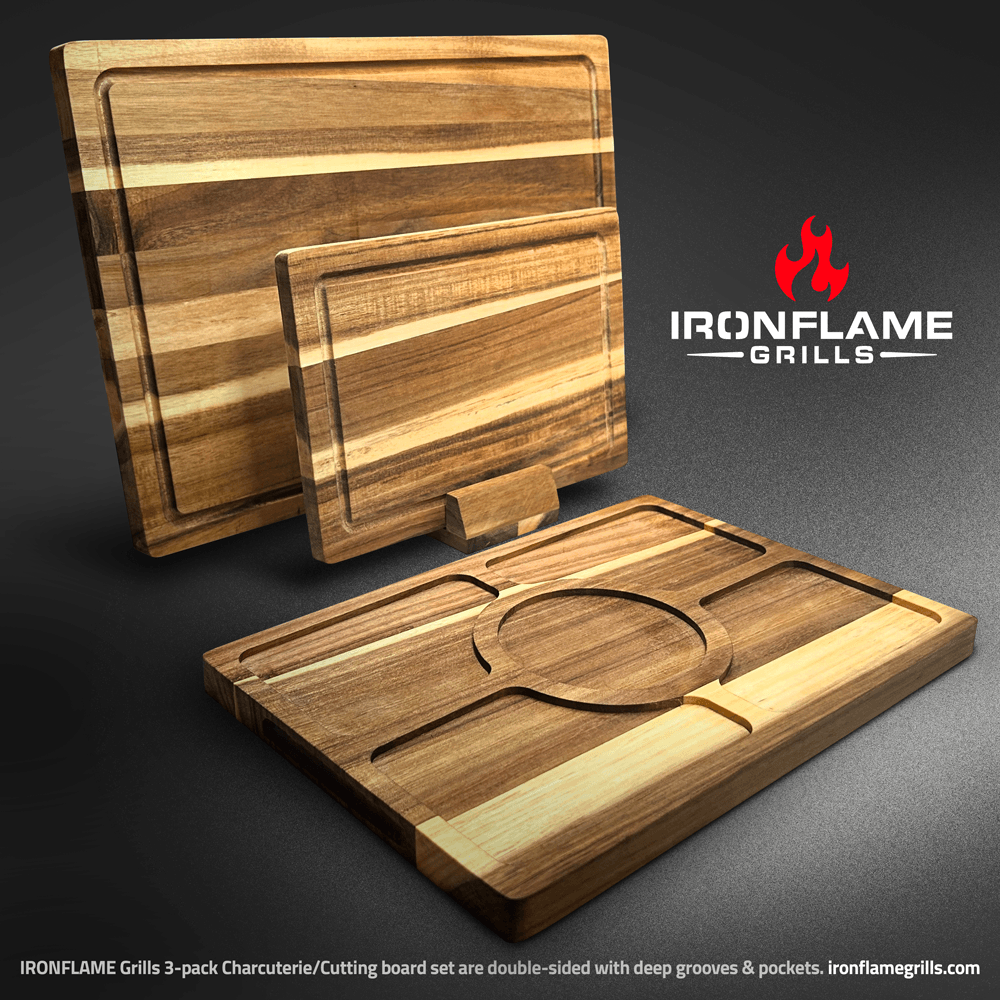
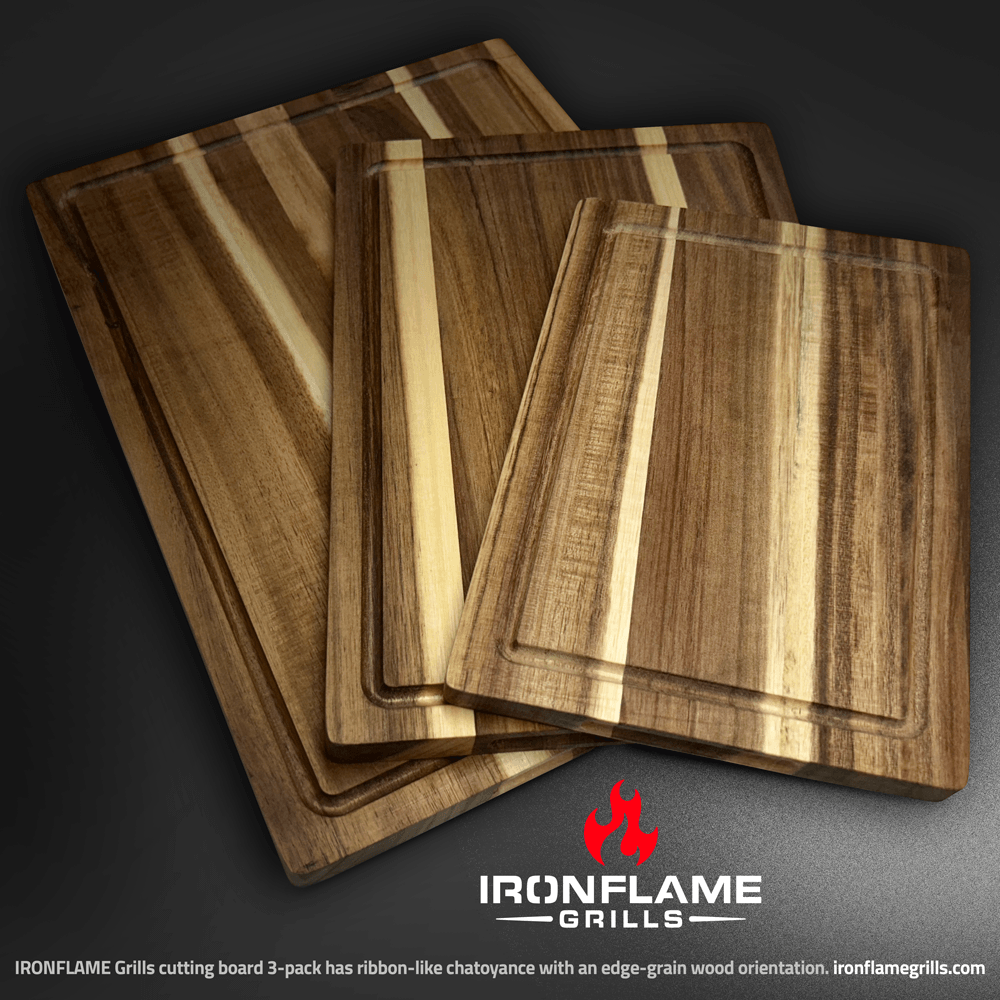
The IRONFLAME Grills 3-piece charcuterie and cutting board set is crafted from richly edge-grained solid acacia wood. It includes three double-sided boards measuring 10”, 12”, and 15” wide, each built to a sturdy 3/4-inch thickness using durable edge-grain, finger-jointed strip construction. Every board features smooth hand-finished surfaces, rounded edges, easy-grip side notches, and deep drip grooves for food preparation, while the reverse transforms into an elegant charcuterie board with integrated serving sections designed around a center dip bowl. The set also includes three laser-engraved boards, non-slip pads, and a matching branded drying rack.

SKU#: IFG08

What's Included?

Our solid acacia cutting board set includes:

  • (3) IFG-branded double-sided boards
  • (1) IFG-branded drying rack
  • (1) Pack of non-slip pads

Total Parts: 5 pcs.

Technical specs
  • SKU#: IFG08
  • Material: Solid Acacia wood
  • Species: Acacia Confusa
  • Wood grain orientation: Edge grain
  • Edges: rounded
  • Sides: Easy gripping side notches
  • Drip Grooves: Yes
  • Color: Natural reddish-brown & accenting amber tone streaks
  • Finish: Natural grain luster
  • Small Board: 10” x 6”
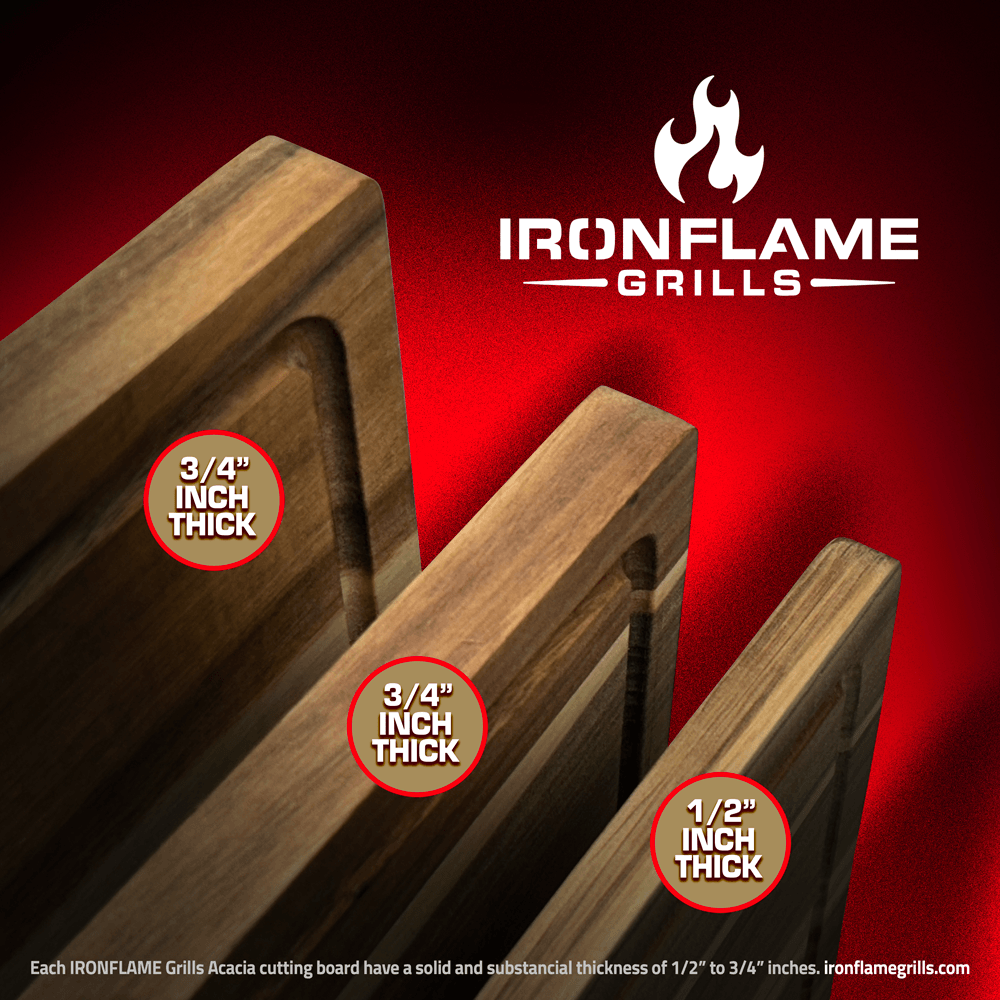
    Thickness: 1/2" inch
    Charcuterie 2nd side - 4 pockets
  • Medium Board: 12” x 8”
    Thickness: 3/4" inch
    Charcuterie 2nd side - 5 pockets
  • Large Board: 15” x 10”
    Thickness: 3/4" inch
    Charcuterie 2nd side - 6 pockets

*Wood grain streaking may vary.

Shipping & Returns
  • Shipping method, cost & delivery set at checkout
  • Return policy See Terms & Conditions
IRONFLAME Grills 3-pack Charcuterie/ Cutting board set

IRONFLAME Grills 3-pack Charcuterie/ Cutting board set

Regular price $44.99 USD
Regular price Sale price $44.99 USD

What's great about IFG boards?

Below are a couple of topics concerning our natural acacia cutting boards.
MULTI-PURPOSE

Our Acacia boards are...

excellent grilling accessories that offer a multipurpose use when barbecueing or preparing a display of charcuterie delectables for the evening.

Tap on the (+) on the image to read more on each topic.

Resourceful Information

Below you'll find Guides for your Acacia Charcuterie / Cutting Board 3-Pack.
GUIDES

FIRST USE GUIDE

This guide provides the recommended preparation steps before using your IRONFLAME Grills acacia wood cutting board set for the first time. Proper first-use preparation removes surface residue from manufacturing and shipping while preparing your boards for their initial conditioning treatment. The included drying rack and non-slip pads help establish proper storage and stability from day one.

Step-by-Step First Use Preparation

  1. Unpack and inspect the set: Remove all packaging materials and inspect each of the three double-sided Acacia cutting boards for any remaining dust or loose particles from manufacturing and shipping. Verify that the included drying rack and non-slip pads are properly accounted for.
  2. Wash before first use: Hand wash both sides of each board using warm water and a few drops of mild dish soap. Use a soft sponge or non-abrasive brush to remove any surface residue. Do not soak the boards.
  3. Dry completely: Immediately dry each board with a clean towel. Place the boards upright in the included drying rack, allowing airflow around both sides. Proper vertical drying helps maintain balanced moisture movement and reduces the risk of cupping or warping.
  4. Apply the SEASONING (Sold Separately): Once completely dry, proceed to the Seasoning Instructions Guide in the next section for the recommended wax balm application process. The first conditioning treatment establishes a protective layer that helps preserve the natural grain, moisture balance, and long-term beauty of the Acacia wood. Read more about our IRONFLAME Grills Seasoning
  5. Install the non-slip pads: Apply the included non-slip pads to the designated areas on the bottom side of each board. These pads help provide additional stability during food preparation while helping protect countertops from direct contact with the wood surface.

Notes for First-Time Use

  • Condition before heavy use: A properly conditioned board provides better moisture resistance and helps protect the natural Acacia grain from drying and surface wear.
  • Use the drying rack after cleaning: Storing boards upright allows airflow around all surfaces and helps maintain proper wood moisture balance between uses.
  • Treat all surfaces equally: Condition the top, bottom, edges, and side grip areas to maintain balanced moisture movement throughout each board.
  • Expect natural variation: Acacia confusa contains unique grain patterns, color variations, and chatoyance streaking. Conditioning enhances these natural characteristics and brings out the wood’s depth and luster.
  • Avoid immediate heavy soaking: During the first few uses, allow the wood fibers time to fully absorb the protective conditioning layer before extended exposure to moisture.
  • Establish a routine: Regular cleaning, drying, and conditioning will help maintain the boards’ appearance, smooth feel, and long-term durability.

MAINTENANCE GUIDE

This guide covers the day-to-day cleaning, sanitizing, and storage required to preserve the natural fiber integrity of your acacia wood cutting board.

Step-by-Step Cleaning Routine

  1. Wash immediately after use: Scrape away food debris. Hand wash both sides of the board using warm water and a few drops of mild dish soap. Use a soft sponge or a non-abrasive scrub brush.
  2. Sanitize naturally: Spray the surface with pure white vinegar or rub it down with a halved lemon dipped in coarse salt. Let it sit for 2–3 minutes to kill bacteria and neutralize odors, then rinse thoroughly with warm water.
  3. Dry completely: Immediately wipe the board with a clean dish towel to remove standing surface water. Stand the board upright on its edge or lean it securely against a wall to dry. Ensure airflow hits both sides evenly so it does not cup or warp.

Notes for Longevity

  • Wash both sides equally: Always rinse and wet both the top and bottom faces of the board, even if you only chopped on one side. Wetting only one side causes uneven moisture absorption, which leads to warping.
  • Maintain the wood finish: Keeping the wood sealed prevents raw food juices and moisture from deeply penetrating the grain, staining the light-colored sapwood, or causing structural degradation.
  • Heal knife marks naturally: Over time, deep knife scores will appear on the surface. Periodically sanding the completely dry board with fine-grit sandpaper 220-grit, wiping away the sawdust, and applying a proper surface protectant will completely restore the smooth finish.

What NOT to Do

  • Never put it in the dishwasher: The extreme heat, harsh detergents, and prolonged water exposure will instantly split the wood seams and ruin the board permanently.
  • Never submerge or soak it: Leaving an acacia board sitting in a sink full of water causes the wood cells to oversaturate, leading to rot, glue failure, and severe cracking.
  • Never dry it flat on a countertop: Laying a wet board flat traps moisture underneath it, creating a perfect breeding ground for mold and causing the top side to dry faster than the bottom, which warps the board.

EXPERT TIPS

Below are cutting board expert tips:

  • Use Softer Western Knives: High-end Japanese knives are made of extremely hard, brittle steel sharpened to a razor-thin angle (usually 15 degrees or less). These chip and dull very quickly on dense hardwoods. Standard German or Western stainless steel knives (like Wüsthof or Henckels) use a slightly softer, tougher steel sharpened to a wider angle (around 20 degrees) that flexes rather than dulls or chips on hard surfaces.
  • Stop the "Scraping" Habit: Never scrape chopped food off the board using the sharp edge of your knife. Dragging the edge sideways across dense acacia rolls the delicate steel blade over instantly. Always flip the knife over and use the spine (back) of the blade to slide food into your pan.
  • Adopt a Rocking Motion: Avoid hard, vertical chopping impacts where the blade slams straight down onto the wood. Instead, use a smooth, slicing rocking motion where the tip of the knife rarely leaves the board, minimizing high-velocity collisions between the steel and the silica-rich wood.
  • Maintain the Wax Layer: Keeping a thick coat of your beeswax-and-oil balm on the board actually creates a micro-thin, lubricated barrier. This reduces direct friction between the steel and the raw wood fibers, giving the blade a smoother slide. Read more about our IRONFLAME Grills Seasoning
  • The Slice-Through Pull: When cutting dense or tough ingredients (like sweet potatoes or thick squashes), never force the blade straight down with pure downward weight. Instead, slice forward or pull backward as you push down. This slicing motion lets the micro-serrations of the steel cleanly sever the food, rather than smashing the delicate edge directly against the hard wood grain.
  • The Off-Hand Spine Glide: When dicing ingredients that require your hand to guide the blade (like mincing garlic), do not let the knife tip pivot heavily in one concentrated spot on the board. Move your cutting zone across different sections of the acacia surface throughout the prep session to distribute the friction wear evenly on both the board and the blade.
  • The Towel-Wipe Wipeout: Never let highly acidic juices (like tomato, lemon, or onion juices) sit pooled on the board while you work. Acid strips your wax layer rapidly, exposing raw wood fibers and natural silica that will immediately increase friction against your knife edge on subsequent cuts. Keep a damp towel nearby to wipe the board clean between ingredients.

SEASONING INSTRUCTION GUIDE

This guide provides specialized instructions for treating your board with an all-natural balm wax composed of pure beeswax, grapeseed oil, and canola oil. The wax requires specific friction and thermal considerations to properly bond with dense acacia wood.

Read more about our IRONFLAME Grills Seasoning

Step-by-Step Conditioning Instructions

  1. Clean the board thoroughly: Wash your Acacia board with mild dish soap and warm water to ensure all food residue is gone.
  2. Allow wood to fully dry: Make sure the board is completely dry, leaving absolutely no moisture trapped within the dense Acacia grain. A tiny hint of surface humidity just before this step draws oils deeper, but the wood must be dry to the touch so the wax doesn't trap rot-causing moisture underneath.
  3. Apply the balm wax: Use your hands or a soft cotton cloth to apply the seasoning balm generously across the surface. Warm the tin slightly before applying; warming the balm liquefies the pure beeswax and natural plant oils, allowing them to penetrate the dense acacia fibers much more effectively.
  4. Rub deeply into the grain: Work the product into the board, rubbing firmly in the direction of the wood grain. Use firm, circular friction motions first to force the beeswax into the microscopic pores of the wood, then finish by wiping in the direction of the grain.
  5. Let absorb: Allow the board to sit undisturbed for 15 to 30 minutes so the wood fibers fully absorb the conditioning grapeseed and canola oils.
  6. Buff off excess: Take a clean microfiber towel and vigorously buff away any unabsorbed residue until the surface feels completely smooth and non-greasy. Using a coarser terry cloth towel for this step creates friction heat that hardens the remaining beeswax into a sleek, water-repellent armor.
  7. Cure before use: Let the newly conditioned wood cure for several hours before using it to prep food.

Additional Notes

  • Repeat for dry wood: If your Acacia board is highly faded or hasn't been conditioned in a long time, repeat the cycle immediately to thoroughly hydrate the grain.
  • Routine frequency: Reapply this balm wax every few weeks, or anytime the shimmering gold and dark streaks of the wood begin to look dry or dull.
  • Low-humidity protection: Keeping a light layer of wax on the board prevents the dense wood from shrinking, cracking, or warping in low-humidity environments.
  • Protect the color boundaries: Acacia contains high-contrast sections of light sapwood and dark heartwood. Regular conditioning keeps these different wood sections expanding and contracting at the same rate, preventing splitting at the boundaries.
  • Shield from extreme heat: Keep your seasoned board out of direct sunlight or away from hot stove burners, which can melt the wax paste barrier and cause the protective oils to bleed out.

What NOT to Do

  • Never use culinary vegetable or olive oils: Cooking oils will eventually spoil, turn rancid, and oxidize inside the wood pores. This creates a sticky texture and a foul, sour smell that taints your food.
  • Do not use harsh chemicals: Cleaners containing aggressive chemicals, rubbing alcohol, or bleach will strip away the protective wax finish, destroy the cells, and turn the dark wood a dull, chalky grey.
  • Never apply balm over a cold board: If your kitchen is cold, the beeswax will instantly harden upon touching the wood, sitting on top as a sticky, gummy layer instead of absorbing.
  • Limit serrated bread knives: Avoid heavy sawing motions with serrated blades, as they tear through the protective wax coating much faster than straight-edged chef's knives.

IRONFLAME Grills Acacia Board Gallery

Images of your Acacia Charcuterie / Cutting Board 3-Pack.